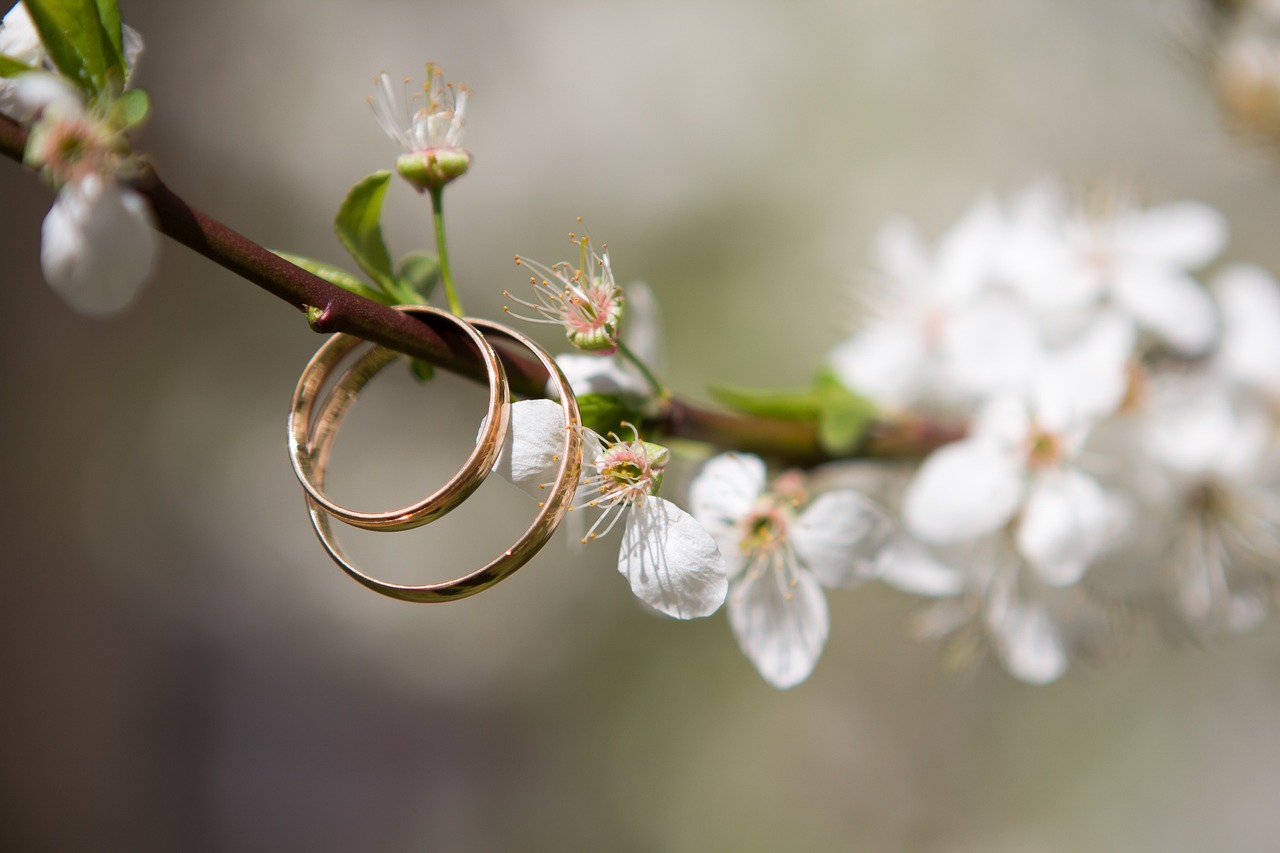
Wedding rings are quite easily the most important and the most intimate piece of jewellery that we will ever wear. Given with such meaning and significance behind them, they are much cherished pieces of jewellery. But have you ever considered the history of the wedding ring, and its origins? If you’re looking to purchase a wedding ring, then you may be interested to explore wedding rings in more detail.
What is the origin of the wedding ring?
The first wedding rings can be traced back to Ancient Egypt. These would have been created from braided reeds and hemp and were given as a symbol of the commitment between two people, placing the ring on the fourth finger of the left-hand which was believed to be where the ‘vein of love’ was found.
The Egyptians believed that a circle was a symbol of a promise of forever, much as it is seen today when exchanged in a modern-day wedding ceremony.
After the Ancient Egyptians, the Ancient Greeks and the Romans were the next to wear early wedding rings. These were often made from bone, ivory or leather. At this point in time, the tradition for metal wedding bands began. Early metal wedding rings would have been made mostly from iron, but for the wealthier, there was also the option for gold and silver bands to mark a marriage.
How did wedding rings evolve?
At this point in the wedding ring’s history, it wasn’t long before wedding rings started to become more personalised. The Byzantine Empire began engraving figures of the couple in question on the rings, and in the 15th century, a short verse would often be inscribed on wedding rings, often known as a ‘Posie ring’. Rings became more elaborate in medieval times, often showing two hands interlocked.
Nowadays, there are no rules for your wedding ring! If you are looking to have a unique wedding ring, why not speak to your local jeweller about the significance of the wedding ring for you, and have rings made bespoke for you?
Do wedding rings have the same meaning in all cultures?
In most cultures, wedding rings are given for the same reason throughout the world and within different religions, to mark a marriage and to give the rings with an intention of the partnership being forever.
However, there are lots of different quirks in different cultures and places, throwing up a variety of different ideas surrounding wedding jewellery.
For example:
- In Hindu culture, men often give women engagement toe rings, known as ‘bichiya’. In today’s society, many Hindus give their fiancées a traditional toe ring and an engagement ring for their hand, too.
- In Japan, wedding rings only grew popular in the 1990s, meaning that they are a very new phenomenon in Japanese culture.
- In Native American culture, rings are often used with rich cultural meaning, for example by adding semi-precious stones or natural materials such as turquoise, shells and coral to a silver band.
- In Celtic culture, a Claddagh ring is often given, which is a traditional symbol of a heart held by two hands and topped with a crown. This type of ring is given to symbolise fidelity.
Don’t forget that if you can’t find a ring to suit your traditions or culture, you can speak to your local jeweller about creating a bespoke wedding ring, just for you.
Looking for your own wedding rings? Visit E.K. Jewellers in Hainault.
If you’re in the process of purchasing wedding rings, why not visit E.K. Jewellers in Hainault?
As experienced jewellers with a vast knowledge of wedding rings, local couples from Ilford and surrounds can rest assured that their wedding jewellery will be in safe hands. We can advise on both in-stock pieces and any bespoke requirements you may have. Pop in store today to discover the significance of the wedding ring for yourself.
